Explore New England Botanic Garden at Tower Hill
This must-visit destination offers inspiration in every season; plus, learn more about the impressive beneficial border at Tower hill in our interview with the Director of Horticulture
In September 2025, Horticulture visited New England Botanic Garden at Tower Hill, located in Central Massachusetts, to learn about one of its newer garden areas: the Beneficial Border. Dr. Steve Conaway, Director of Horticulture, explains the ideas behind this ecological planting, plus how and why home gardeners might adopt some of its strategies, in the video above. Read on to learn more about other sections of New England Botanic Garden, provided by Horticulture columnist Greg Coppa.
A Visit to New England Botanic Garden in Massachusetts
Two weeks post shoulder surgery, I felt a great need to get out of the house, which was becoming much too small. A trip to a botanical garden not far away seemed like just the thing to perk me up.
So on an unusually warm early October day, I headed for New England Botanic Garden in Boylston, Mass., which had been on my “to visit” list for a while. I couldn’t have picked a better day.
New England Botanic Garden Beginnings
New England Botanic Garden at Tower Hill opened to the public in 1986, but its roots stretch back to 1842, when local doctors and businessmen formed the Worcester County Horticultural Society (WCHS) “for the purposes of mutual improvement in the theoretical and practical branches of horticulture.”
Modeled after the Royal Horticultural Society, the WCHS quickly began organizing events and exhibitions to celebrate the flowers and agriculture of central Massachusetts. The farming community in and around Worcester greatly supported the WCHS, eventually leading to the construction of Horticultural Hall in downtown Worcester, plus a well-regarded lecture theater and library. But as the local landscape changed from one of farms and country estates, it became harder for the WCHS to put on events.
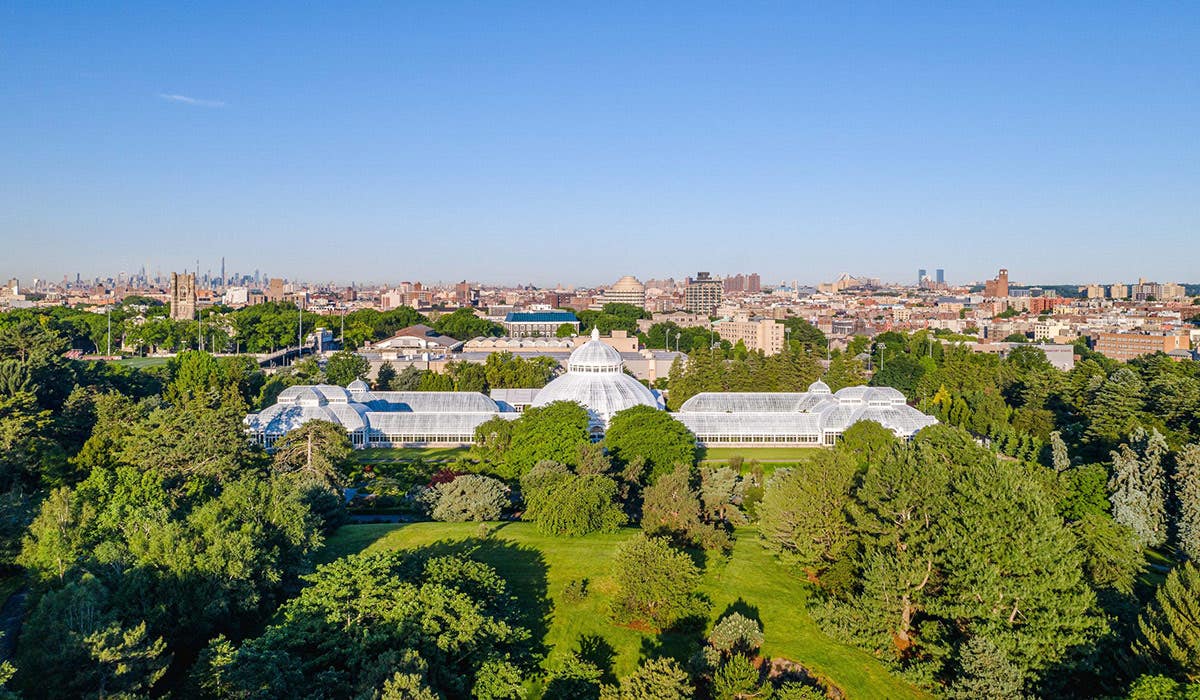
In the mid-1980s, the organization purchased the 130-acre Tower Hill Farm from the Carter family, with plans to create a botanic garden. The decades since have seen steady growth and development of distinctive garden areas, along with pathways that traverse natural meadows, forests and wetlands. The acquisition of adjacent land brought the site to nearly 200 acres, making the Garden expansive enough to dissolve any crowds and create a degree of privacy for contemplation or tranquil enjoyment.
Today, Dr. Steve Conaway serves as Director of Horticulture. When we met, he was just finishing up his first year there.
“I am excitedly busy learning the seasonal rhythms of the gardens and identifying what works, while editing what doesn’t,” he shared. He was previously employed at Wave Hill in the Bronx, and he has a background in research and conservation. This “dovetails well with the organization’s aspirations to develop new plant-science programs and steward the natural spaces across the Garden’s 200 acres,” he said.
Related Article: Heritage Roses Flourish at Wyck Garden in Philadelphia
From Ornamentals to Beneficial Plants
At New England Botanic Garden, there is always something interesting to see, and many things to come back to view on later visits. This being New England, every month offers a different highlight.
The Lawn Garden—one of many themed areas—features an oval lawn bordered with planting beds that demonstrate the use of diverse plants for year-round appeal. These beds treat spring visitors to thousands of brightly colored tulips, crocus and daffodils along with snowdrops (Galanthus), bright blue or purple reticulated iris (Iris reticulata) and glory of the snow (Scilla luciliae). As summer unfolds, the perennials begin their ascendance here, particularly the peonies and daylilies. At the time of my visit, the trees and shrubs dotting the deep borders were showing their fall appeal and hinting at the winter interest yet to come from berries and bark.
The Secret Garden
At the southern end of the Lawn Garden, reached by a beautiful stone staircase, is the Secret Garden. A quieter space sometimes used for weddings, the Secret Garden receives gentle runoff from the Lawn Garden above, making it a great spot for moisture-loving irises and calla lilies. Because of the moisture and the backdrop of heat-storing stonework facing south, this is a nice little microclimate capable of hosting some temperature-sensitive plants and extending the season for others that may be damaged by early frost.
Beneficial Border
Also adjacent to the Lawn Garden is the Beneficial Border, a newly reclaimed area once filled with invasive plants, a tangle of shrubs and mixed grasses. Inspired by the New Naturalism movement, the Beneficial Border aims to show the “connection between people, plants and pollinators” and foster the preservation and restoration of pollinator populations decimated by climate change, the use of potent and persistent chemical pesticides and the loss of habitat. To bring the concept to life, some nine thousand mostly native plants and specimen trees were thoughtfully placed here by staff with the help of volunteers.
Careful consideration went into the palette—for example, yarrow (Achillea millefolium) was included for insects with shallow mouths, while cardinal flower (Lobelia cardinalis) was selected for insects with a long, sometimes coiled proboscis, like butterflies and hummingbirds.
Related Article: How Budburst Connects Gardeners to Climate Change
Wildlife considerations
Concern for wildlife extends throughout the garden. Dr. Conaway spoke to me about the need to protect plants from insect, disease and predator damage in the most environmentally sensitive way. Synthetic insecticides and herbicides are avoided as much as possible by using smothering oils or soaps and maintaining simple sanitation controls. They also use hand grooming, whereby insects are picked off by hand or their eggs destroyed with an alcohol-dipped cotton swab, though it is quite labor-intensive.
Dr. Conaway also related that opportunistic deer—a nemesis we share—necessitate periodic old-fashioned “deer drives.” This entails staff and volunteers spacing themselves at relatively close intervals and walking from one end of the fenced-in grounds to the other while “beating the bushes” so to speak, to drive the herd out. There is so much more to managing botanical gardens than most people would ever think, isn’t there?
Preserving History at New England Botanic Garden
There are two projects at New England Botanic Garden that I find quite interesting: the Frank L. Harrington Sr. Apple Orchard and an American chestnut restoration initiative.
Frank L. Harrington Sr. Apple Orchard
Frank L. Harrington was a fruit-tree enthusiast and long-time supporter of WCHS. Within his namesake orchard, the apple collection itself is known as the Davenport Collection, after Stearns Lothrop Davenport, a WCHS trustee who started collecting and saving many heirloom apple varieties during the Great Depression.
This orchard may be thought of as a living museum of sorts, featuring 119 heritage varieties selected for outstanding size, texture, taste and color qualities. Apples bear names like Yellow Bellflower, Black Gilliflower, Gravenstein and, my favorite, Rhode Island Greening. (My mother claimed this was the very best pie apple for its pleasantly tart flavor and how it retains its firmness even when well baked.)
Restoring the orchard
Recent years have seen much effort go into restoring the orchard, which was in decline due to the natural lifespan of the trees and the onslaught of fire blight, a bacterial disease. Beginning in 2019, John Bunker, a renowned orchardist from Maine, helped the Garden preserve its collection by grafting scions taken from each of the heritage varieties onto blight-resistant rootstock. The orchard was then razed, the soil restored, and the grafted saplings planted in 2021.
The hope is that as the trees grow, NEBG will be able to provide scions to scientists and growers worldwide. Cultivating these varieties in diverse locations helps ensure that their characteristics will be preserved for future generations. Apple seeds do not pass on the true characteristics of the fruit from which they were derived—only scions do.
American chestnut restoration initiative
Another restoration project at NEBG focuses on the American chestnut (Castanea dentata). In colonial times it was said that a squirrel could jump from one chestnut tree to another all the way from Maine to Georgia. The nuts, encased in a spiny husk resembling a spiny sea urchin, were nutritious and relied upon by native peoples as a staple. European settlers enjoyed them roasted or ground into baking flour. The nuts were once so abundant, growing on trees often 100 feet tall, that they were even used as an animal feed. The straight-grained, strong and rot-resistant wood came to be used for railroad ties, telephone poles and fence posts. But in the early 20th century the fungal blight Cryphonectria parasitica brought the chestnut to the brink of extinction.
Today, much effort is being expended to find naturally disease-resistant trees in the wild or to breed disease-resistant characteristics.
NEBG has partnered with the American Chestnut Cooperators’ Foundation (ACCF) to act as a test site for pure C. dentata trees that show natural immunity to chestnut blight. Seedlings and seeds have been planted where there is evidence that the species once thrived, and the garden is monitoring their development.
Joyful Spaces at New England Botanic
The Ramble
While much serious work takes place at New England Botanic Garden, it’s also a garden full of color and fun. No space may demonstrate this better than the fanciful area called The Ramble, designed for the youngest visitors. It has interactive features that change periodically; when I visited it included artificial plants constructed to imagine their evolution on planets with very different conditions, such as stronger or weaker gravitational fields. What a way to teach youngsters to reflect on cause and effect!
There is also a small pond in The Ramble with aquatic plants, and I noticed an impressive border nearby of assorted witch hazels (Hamamelis) that must really present an impressive display in their winter bloom.
Related Article: Step Back in Time at Longfellow Garden in Maine
The Orangerie
Speaking of winter, botanical gardens in the northern U.S. can be display-challenged in that season. But New England Botanic Garden has two conservatories to shelter (and show off) around 400 tropical and semi-tropical plants.
In the Orangerie, built in 1999, the temperature ranges from 60 to 70 degrees (F) in winter. Tropical jungle-like humidity is maintained by the simple act of hosing down the floor each morning and allowing the water to evaporate. In early fall you may be fortunate (or unfortunate) enough to catch the Zulu giant (Stapelia gigantea) in bloom. Its flowers smell of decaying meat to attract their preferred pollinators: flies. For a more conventional floral experience, you might time your visit to coincide with the garden’s annual late-winter celebration of orchids featuring thousands of colorful specimens.
About a decade after the Orangerie was inaugurated, NEBG opened its Limonaia to cater to sub-tropical specimens that prefer winter temperatures between 55 and 65. So, between these two conservatories you can find thriving and diverse plant representatives from every continent save Antarctica. A winter visit to them would be a very convenient way to study convergent/divergent evolution and plant morphology—or to treat yourself to colorful displays and intriguing scents otherwise requiring a lengthy trip toward the equator.
Plan a visit to New England Botanic at Tower Hill
- New England Botanic Garden at Tower Hill is located in Boylston, Mass., just outside of Worcester.
- Open year-round, save for select holidays.
- Special events, exhibits and workshops take place continually.
- For full visitors’ information, visit the website.
Greg Coppa is a writer, traveler and lifelong plant enthusiast who gardens in Rhode Island.