Blooms in the Bronx: Plan a Visit to New York Botanical Garden
This city garden oasis is also an epicenter for plant research and education
The history behind New York Botanical Garden
Before New York Botanical Garden was founded in 1891, a predecessor to this internationally acclaimed institution was created in 1801 on the site of today’s Rockefeller Center: Elgin Botanic Garden. However, Elgin was as much tied to the practice of medicine as it was the study and appreciation of plant life. Medical practices in the early 1800s still relied heavily on herbal knowledge, and Columbia College professor Dr. David Hosack wanted to create a garden where his students could learn from living plants. Elgin Botanic Garden did not last long, closing in 1811 when Hosack could no longer afford to support it, but the idea for a new botanic garden did not start percolating until the 1880s. The idea was first formed at meetings of the Torrey Botanical Club, a group of botanists at Columbia University who studied under John Torrey, a coauthor of the earliest volumes of A Flora of North America and the star student of Hosack.
Bringing the project to life
The full vision of New York Botanical Garden came into view after Nathaniel Lord Britton and his wife, Elizabeth, traveled to London and visited the Royal Botanic Gardens at Kew. Nathaniel was a Columbia professor and member of the Torrey Botanical Club, while Elizabeth was a respected scholar of mosses. The Brittons envisioned a botanical garden in New York that would become an epicenter for international plant research in the United States, along with the other impressive New York institutions that were being built at the time to emulate their academic, scientific, and cultural counterparts in Europe. When the Brittons returned from their trip, the project was quickly set into motion, and the city offered the 250-acre Bronx Park as a location for this new botanical institution. NYBG was founded three years later, with Cornelius Vanderbilt II serving as the first president of the board and Britton becoming the first director in 1896.
Related Article: Plan a Visit to Historic Longwood Gardens in Pennsylvania
About New York Botanical Garden:
- Location: 2900 Southern Blvd, Bronx, New York
- Size: 250 acres
- When to visit: 10 a.m. to 6 p.m., Tuesday to Sunday
- For more information visit: nybg.org
Science at the forefront
Some botanic gardens begin as elaborate landscape designs created with beauty in mind, but the landscape of New York Botanic Garden was dictated by the vast plant collections that were acquired first. Mirroring the Kew’s model as a museum of plants, the Brittons sought to build collections that were comprehensive—propagating and cultivating tropical and desert plants, deciduous trees and large-scale conifers, native plants, alpine plants, perennials, bulbs, annuals and roses from all around the world. Some of the towering specimen trees that can be found in the Arthur and Janet Ross Conifer Arboretum today were grown from seeds or cuttings collected from the wild during these early days of NYBG.
LuEsther T. Mertz Library
As academics, the Brittons also understood the importance of amassing a comprehensive research collection to be stored at NYBG. John Torrey’s botanical library was the core of what would become the LuEsther T. Mertz Library, which is now the largest archive of botanical literature in the Western Hemisphere. Torrey also contributed generously to the William and Lynda Steere Herbarium, which currently holds more than 7.8 million preserved specimens. Garden scientists and students from the stellar universities and colleges of New York utilize these world-renowned resources to study and preserve plants of the world.
Time to call in the landscape designers
As the plant collections expanded, it was soon time to bring in real design professionals. A team of landscape designers was tasked with creating the gardens that would house a substantial array of plants while allowing for future additions and renovations. Many world-class designers put their touch on the New York Botanical Garden over the years, but some of the earliest and most influential are Calvert Vaux, Beatrix Jones Farrand, and Ellen Biddle Shipman.
Calvert Vaux, who is best known as the co-designer of New York’s Central Park, was the original landscape architect of the garden. He planned the layout of the main buildings and positioned the roads and entrances, which organized the site and forever impacted the character of the gardens as well as how visitors navigate the space.
In 1915, Beatrix Jones Farrand was commissioned to design a large rose garden. Farrand was one of the most well-known and highly respected landscape architects of the time and the only woman founder of the American Society of Landscape Architects. The asymmetric, triangular rose garden she created has become about as famous as her impact on landscape design.
Lastly, Ellen Biddle Shipman, who began her career in landscape architecture at the age of 42, was tasked with designing a long perennial border along the southeast side of the Conservatory in the early 1930s. Shipman designed world-class gardens throughout the Northeast and approached planting with color “as a painter would,” but she might be best known for the trailblazing work she did to support and promote women in the field of landscape design. Because of Shipman’s impact and the garden’s Women’s Auxiliary Committee's support, the border was named and is still known as the Ladies’ Border.
Related Article: Explore the New England Botanic Garden at Tower Hill
4 Signature plants to spot at New York Botanical Garden
The many collections at New York Botanical Garden can make it difficult to point to just a handful of plants as “signature” to the garden. However, certain areas in NYBG seem to receive special adoration, other sections have historical significance that gives the plants more prestige, and others still are recognized for how they are celebrated and displayed.
1. Orchids
Orchids are a staple of many botanic gardens, and it should be no surprise that NYBG’s collection is extensive. The garden has been making special use of these tropical beauties recently. Each year, NYBG holds an annual orchid show, with large displays and arrangements created in themes ranging from Florals in Fashion to the Orchidelirium of the Victorian era.
The show is held in the impressive and beautiful Enid A. Haupt Conservatory and runs from February through April, making it a wonderful escape from New York’s blistering winter as well as a marvelous celebration of spring. These shows, in addition to celebrating the many forms of orchids, also spotlight leading floral artists. In 2026, Mr. Flower Fantastic, an anonymous New York–based floral artist and sculptor, brought his larger-than-life displays of urban settings and culture to NYBG’s famed conservatory.
Related Article: Admire Native Orchids in their Natural Habitat
2. Azaleas
Although their peak display is short-lived, the azalea gardens at NYBG attract scores of visitors every year. Early May brings an explosion of brightly colored blooms across the rock outcrops and steep slopes in the Maureen K. Chilton Azalea Garden. While any garden lover will be awestruck by the display, the spring-flowering shrub aficionado will be especially delighted by the 6,706 plants that include 456 different species, hybrids and cultivated varieties. This creates what looks like a wall of fabulous flowers that sparkle in the dappled shade produced by the surrounding centuries-old native trees.
Related Article: Compact and Hardy Encore Azaleas
3. Tulip trees
One of the plants with the most historical significance at NYBG is the tulip tree (Liriodendron tulipifera), which was especially impressive in the rows of trees along the drive leading to the Library Building. This is called the John J. Hoffee Tulip Tree Allée, and it was conceived by the garden’s original landscape architect, Calvert Vaux. Originally planted in 1903, these trees received special care and maintenance that allowed them to far exceed their expected lifespan. However, time finally took its toll and in 2020 the decision was made to gradually replant the Allée. Over the next several years, the old trees were removed in stages and replaced with brand new tulip trees. Visiting today will allow you to see the early years of what will hopefully be hundred-year-old trees.
Related Article: When Planting for Pollinators, Don't Forget Trees!
4. Roses
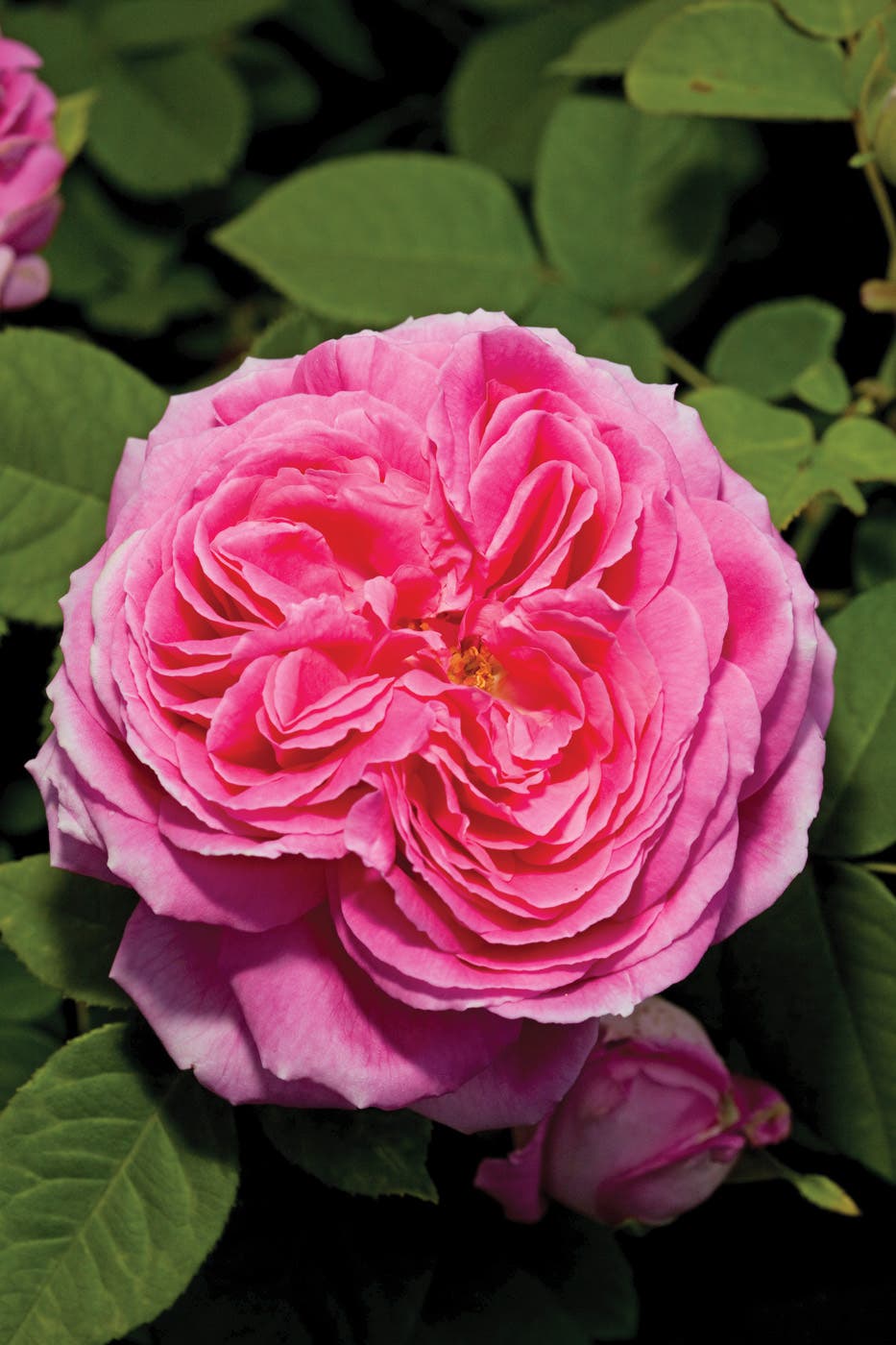
I have already mentioned the Peggy Rockefeller Rose Garden and its original design created by Beatrix Jones Farrand, but the story of this signature garden is a little more complicated. With World War I raging when Farrand originally made her designs, it was not possible to source the iron needed to complete the garden’s fence or ornate gazebo. It wasn’t until the mid-1980s that Garden Board member Beth Strauss showed Farrand’s original designs to David Rockefeller, and the garden finally got full funding for completion. The garden was finalized in 1988 and was named after David’s wife, Peggy, a horticulturist and conservationist who loved roses. Today, you can check out Farrand’s design with more than three thousand roses representing more than 700 different species, hybrids and cultivated varieties.
Related Article: Heritage Roses at Wyck Garden in Philadelphia
Source: Long, Gregory. “The New York Botanical Garden.” SiteLINES: A Journal of Place, vol. 2, no. 1, 2006, pp. 13–15. JSTOR, http://www.jstor.org/stable/24889261. Accessed 9 Apr. 2026.