Making Fast Compost with Leaves
To bring soil back to life—or, rather, to bring life back to the soil—you just have to add vegetative matter. Compost is the classic method, but fall is the best time of year to do it the easy way, with leaves.
Deciding to have an organic garden means doing two things: avoiding harmful chemicals and improving the soil. For many, banning chemicals comes as a no-brainer. Why would anyone choose to spread stuff that is hazardous to his or her personal environment? On the other hand, improving the soil, a huge part of organic growing, gets less attention than it deserves.
An important difference between “conventional” and “organic” growing is that conventional growing feeds the plant, while organic growing feeds the soil so it can feed the plant. Healthy soil provides everything a plant needs; the healthy plant shrugs off attacks by insects and diseases. A conventionally grown plant is a botanical junkie—it has to get that chemical fix or it will wither. Its immune system is weak, so without chemical protection, it dies.
Happily, soil improvement is cheap, easy, and guaranteed to be effective. Good soil is alive, literally. When school classes visit my garden or farm, I hold a double handful of compost out to the kids and tell them, “There are more living things in this than there are people in the world!” Their eyes pop open, but it is true. And the presence of beneficial microorganisms makes the difference between good healthy soil and the lifeless growing medium you find in some farm fields.
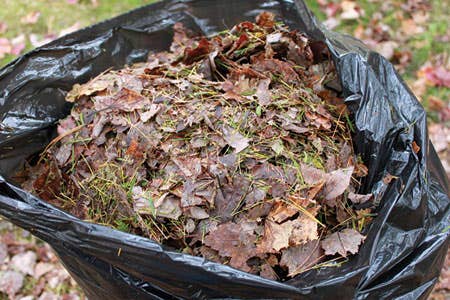
To bring soil back to life—or, rather, to bring life back to the soil—you just have to add vegetative matter. Compost is the classic method, but fall is the best time of year to do it the easy way. Take all those leaves that fall from your trees, run over them with the lawn mower to chop them up a bit, and then spread them all over your garden, about six inches deep. Clear some space, a few inches wide, around the stems of trees and other perennials to keep mice from burrowing in. If you can get some straw or seaweed, spread those around too.
This is called sheet composting. By spring, most of what you laid down will have decomposed to make a lovely layer of worm-rich humus filled with beneficial organisms. Rake any still intact material aside as a basis for a new compost pile. Gently (you don't want to hurt those worms!) scratch the rotted material into the top three inches of the original soil, or plant right into it.
Do this every year, and your plants will thrive. No chemicals needed.
Hortmag.com is a participant in the Amazon Services LLC Associates Program, an affiliate advertising program designed to provide a means for sites to earn advertising fees by advertising and linking to Amazon.com and affiliated websites.