Botanical Latin Has Inspired a Modern-Day Debate
Botanical Latin helps gardeners all around the world communicate about plants, but the system is not without criticism
Botanical Latin allows one gardener in Japan and another in New Jersey to compare notes on the same plant. It gives valuable clues to a plant’s height, attributes and uses. But it’s not perfect—and not just because the taxonomists keep changing plant family names, sending gardeners into a swirl of confusion. Today we are reexamining choices in nomenclature, from plants to animals and birds, because of words or names that have taken on negative associations, or honor indigenous cultures rather than colonizers.
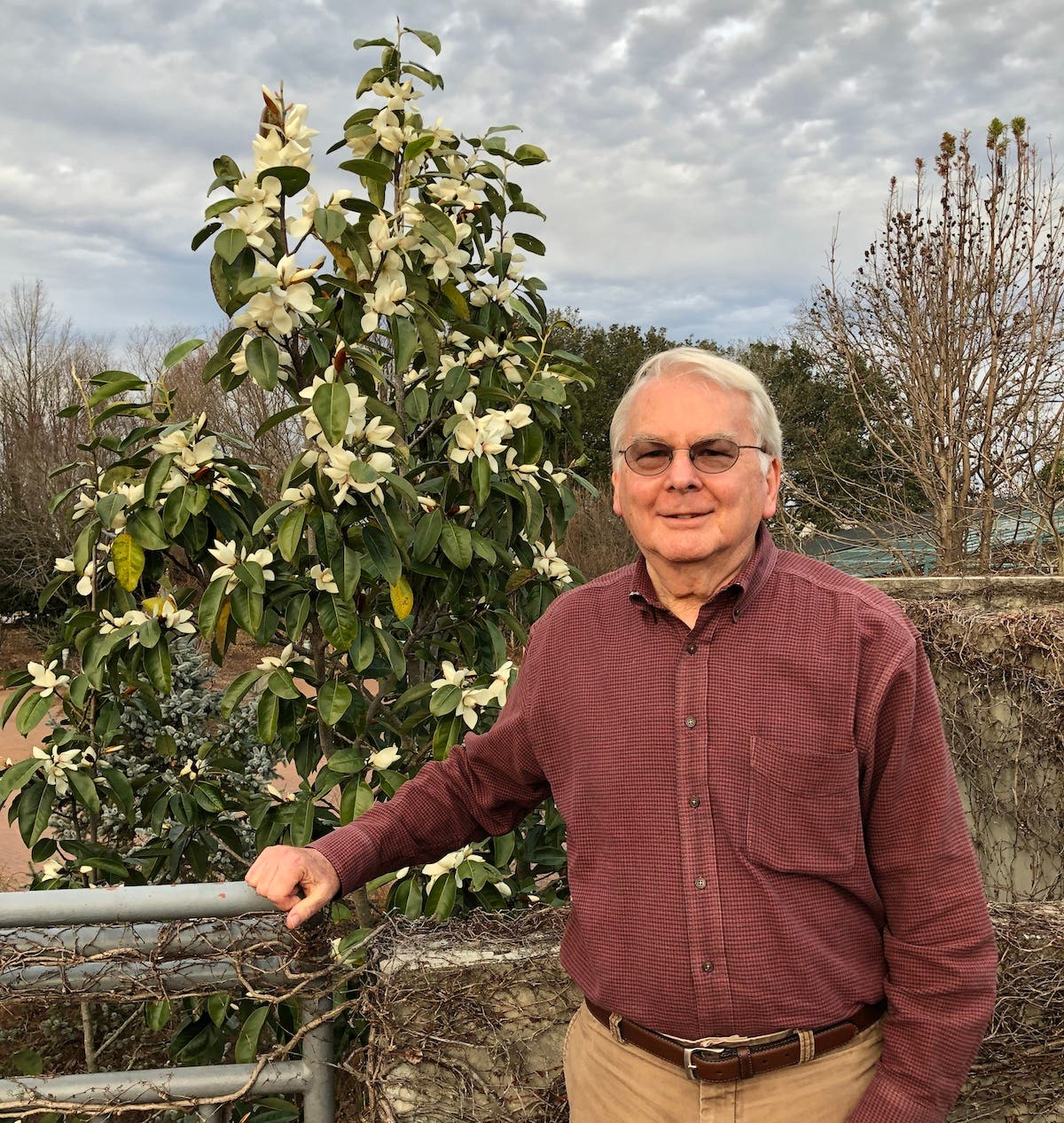
“We live in a world where plants and animals are suffering from a variety of causes, so to preserve a given species we need to understand and know about it,” says botanist Ross Bayton, author of The Gardener’s Botanical: An Encyclopedia of Latin Plant Names and Director of the renowned Heronswood Garden in Kingston, Wash.
“To do that, every plant or animal needs a unique label like the binomial system,” he continues. “It’s not a perfect system by any stretch, but it can be modified.”
Let’s look at how botanical Latin works—and how it may be changing. To understand the current questions, we need to explore its roots.
Benefits of Botanical Latin
Before botanical Latin, there were only common names, the nicknames given to the plants in a certain region. Naturally, that means a plant may have nearly as many common names as there are microclimates in our gardens.
Consider the musical, descriptive and popular term “bluebell.” What plant comes to mind? Depending on where you grew up, it might be a Mertensia, Campanula, Hyacinthoides non-scripta or several other plants worldwide, Bayton writes in The Gardener’s Botanical. Botanical Latin, also called binomial nomenclature, cuts through the babble of common names.
This allows us to catalog, share and preserve plants as well as information we learn about their care, propagation and cultural or ethnobotanical significance.
Latin names also offer helpful clues about plant’s growing needs, uses and appearance. By understanding some of its common words, you can decode plant tags while plant shopping, discerning that this plant is stinky (foetida), while that one is dwarf (nana).
Binomials, broken down
The binomial system was pioneered by Swedish botanist Carolus Linnaeus (Carl von Linné) in his 1753 book Species Plantarum. In that age of exploration, the world of plants was rapidly expanding, and in Europe plants were routinely called by phrases that could be 10 to 20 words. A better way was sorely needed. Linnaeus’s system brings a species name down to two words, pairing the name of a genus (plural, genera) and a specific epithet, as in Acer palmatum. Closely related species share the same generic name, while like genera are gathered under the umbrella of a family.
Beyond plants, this system was adopted for animals, including humans.
Latin was chosen, Bayton says, because it was the classical language of scholarship and a somewhat neutral choice, being widely known yet not specific to any one country.
With origins in ancient Latin and Greek, today’s botanical Latin is a morphing creature, mixed with non-Latin names like banksii and menziesii. Beyond the classification rules, there is a lot of discretion in naming, from gender to pronunciation. That’s why we disagree over whether to say CLEM-ah-tis or clem-AH-tis.
Why Plant Names Change
With discoveries of new plants and advances in DNA technology, taxonomists regularly shift plants among families and genera, renaming them. It can be hard for gardeners to keep pace—not to mention growers, nurseries and public gardens who must change their plant tags and systems.
For instance, the hydrangea family, or Hydrangeaceae, acquired several new members recently, and Schizophragma hydrangeoides is now named Hydrangea hydrangeoides (which translates to the muddy concept “hydrangea-like hydrangea”).
“Taxonomists don’t take it lightly when they make these decisions,” Bayton says, adding that “you feel like you’re going to get pelted with tomatoes” when you announce a new name.
“As a person who creates names, I look to the option that creates the least change,” he confirms.
Problematic botanical Latin plant names
Today, debates over ethics and colonialism are fueling movements to change existing names and the ways we create new ones, raising a lot of questions.
There are names that are now widely perceived as offensive, expressing the biases of their time. For example, in South Africa botanists are working to change plant names with or related to the specific epithet caffra, because it was derived from a racist slur (kaffir). (This also applies to common, or colloquial, names. Citrus histrix, formerly called by the common name “kaffir lime,” is now called “Thai lime” in South Africa.)
Linnaeus’s own naming and classification of humans by characteristics including skin color, other physical traits and behavior was used for generations to justify systemic racism, a topic explained by the Linnean Society of London at their website, linnean.org.
In an email to me, Professor Anjali Goswami, the society’s current president, noted Linnaeus’s system as “vital for sharing knowledge and for conserving biodiversity.” She continued: “We welcome the current debate across all of biology about how to support stability in naming while making sure that science is welcoming to all backgrounds and cultures, and we are keen to support a healthy, respectful discussion on this topic.”
Modern-day debates on naming
Much of the debate swirls around names given to honor colonizing explorers who “discovered” a plant—which, by omission, ignore and potentially erase indigenous knowledge of and cultural relationship to a plant. In New Zealand, Māori names are being included in new plant species names, and some scientists are calling for existing names to be revised, too.
Ross Bayton agrees that it’s crucial to consult the people affected by the change—not just to debate among taxonomists—and notes that this is more easily done on an island with a single indigenous language, compared to a continent like North America, with so many native cultures and languages. Thuja plicata, for example, central to the traditions of numerous tribes across the United States, has so many different indigenous names, it would be impossible to choose among them.
Heronswood is owned by the Port Gamble S’Klallam tribe. Bayton points out, “These plants are precious cultural items that have significance – they have lived with them for millennia. They are so much more than the label Thuja plicata, and using a (name created by Europeans) isn’t the greatest thing, but what else do we do?”
In this case, he says, “Latin seem like the least worst option.”
Shifts in animal names
Some of the most sweeping nomenclature changes have been seen in the bird world. The American Ornithological Society is doing away with all common names that relate to people—like the Anna’s hummingbird or Cooper’s hawk—or to offensive words. The scientific names, however, will be unchanged.
In addition, many state chapters of Audubon Society groups have rebranded based on James Audubon’s views on slavery and Indigenous Americans. (The National Audubon Society announced in 2023 that it was keeping its name.)
As to other animals, the International Commission on Zoological Nomenclature (ICZN) said in a report, “Replacing accepted scientific names because of perceived offensiveness is not, and should not be, regulated by the Code….the commitment to a stable and universal nomenclature remains the priority.”
Looking ahead: The future of botanical Latin
The moving target of multiple variables and cultural lenses makes the idea of reworking botanical Latin a thorny problem. Who gets to decide what makes a good name?
In addition, conservationists say that declining species can’t spare the time, money and effort it would take to make systemic change. So, we may be looking at smaller-scale solutions decided locally, with binomial names remaining a constant.
“My feeling is that the Latin name is a technical name used in documents,” says Ross, likening it to a number. “Maybe in the future we will have handheld devices that can scan the DNA of things. Maybe we’ll evolve around this argument with some kind of electronic nomenclature that takes out all the human from it. But maybe it takes us doing that to solve these questions.”
More from Horticulture:
Check Us Out on Instagram @Hort.Mag
Subscribe to Horticulture Magazine
Shop Vintage Horticulture in Our Online Store